
Underwater structured-light 3D imaging method based on FP-DiffNet
FP-DiffNet restores degraded underwater fringe patterns with diffusion-model denoising, reaching 42.42 dB PSNR, 0.0354 rad wrapped-phase MAE, and sub-0.1 mm reconstruction RMSE in high turbidity.
Jan 1, 2026
Self-calibrating structured light three-dimensional imaging method with fringe projection
A self-calibrating fringe-projection 3D imaging technique that integrates bundle adjustment: starting from the independent calibration of the camera and projector, it jointly optimises the camera and projector parameters together with the scene's 3D points, so that extrinsic parameters drifting under vibration are corrected without interrupting measurement.
Jan 1, 2026
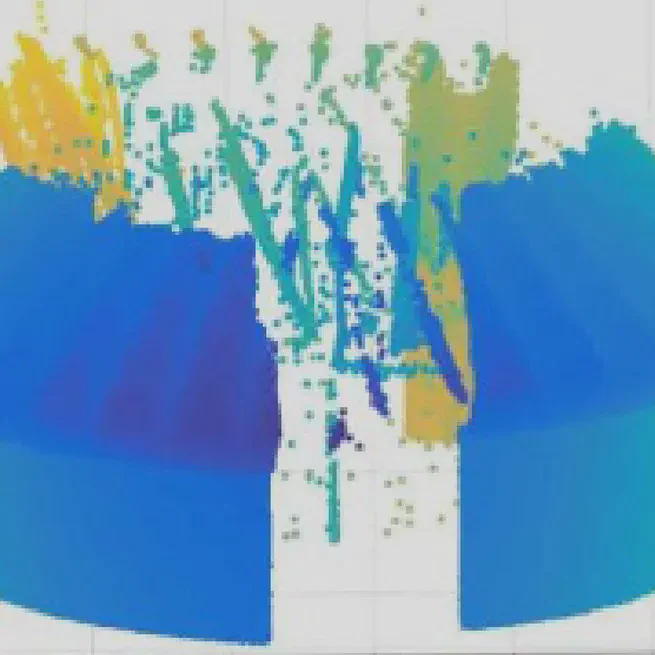
Deep diffusion model-based dual structured light for large-format complex surface imaging
A dual-head structured-light prototype measures large complex surfaces with two synchronised projector–camera units and uses a conditional diffusion model to recover the aliased fringe patterns in their overlap, reaching 45.80 dB fringe recovery PSNR and reconstruction accuracy up to 8 µm.
Jan 1, 2026
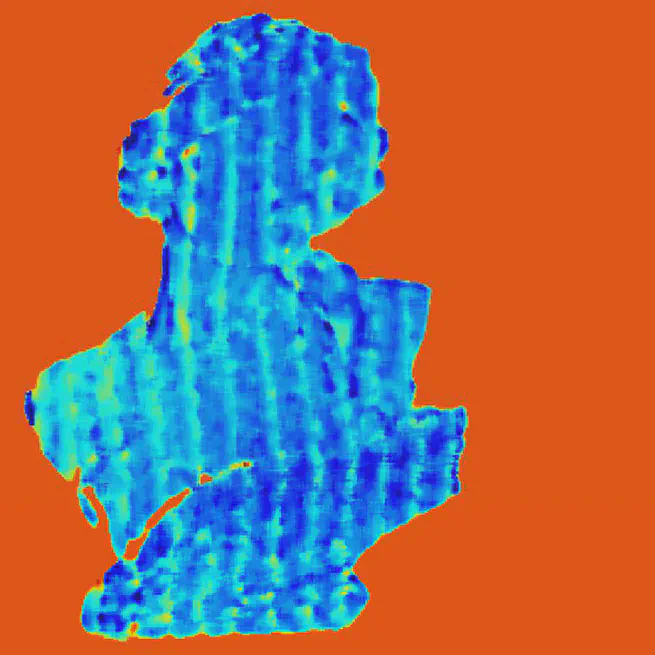
Deep transformer-enhanced dynamic structured light for three-dimensional moving object imaging
This work combines transformer-based correspondence tracking in fringe images with phase-shifting profilometry, estimating motion-induced phase errors pixel by pixel and compensating them for accurate 3D imaging of objects moving in arbitrary directions.
Dec 15, 2025
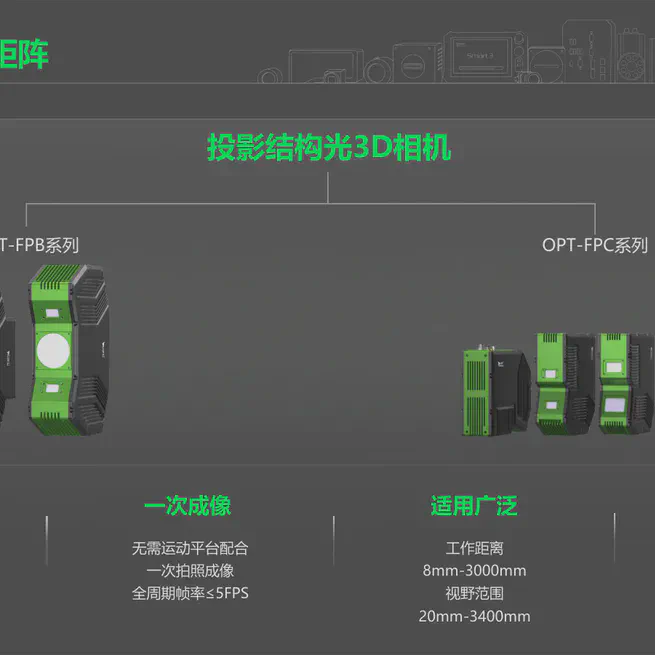
OPT Projected Structured-Light 3D Cameras
A projected structured-light camera family for one-shot 3D imaging, covering FPB dual-projector and FPC single-projector series with high repeatability, pixel-aligned 2D/3D output, and hardware-side point-cloud computation.
Dec 8, 2025
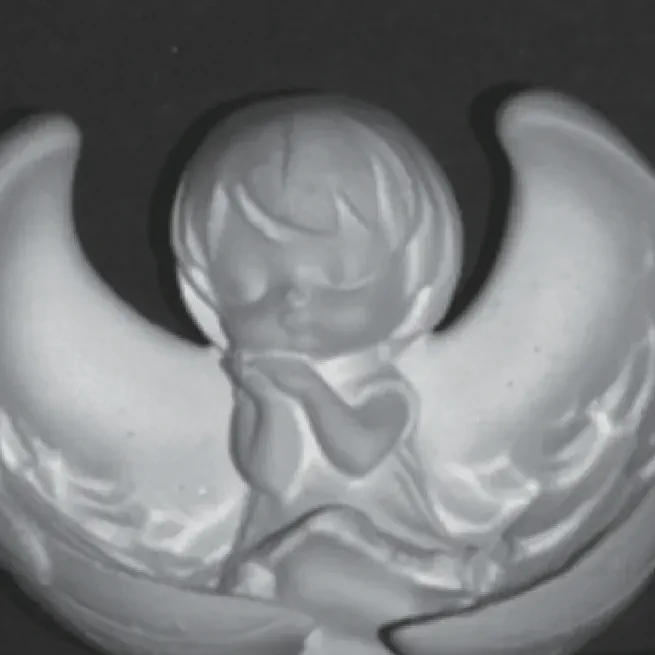
Calibration Method of Fringe Projection Based on High-Order Polynomial
A fast calibration method for phase-shifting profilometry: a high-order polynomial maps pixel coordinates and absolute phase to 3D, and its coefficients are fitted with a sparse greedy randomized Kaczmarz (SGRK) algorithm instead of least squares.
Jan 1, 2025
Generative deep-learning-embedded asynchronous structured light for three-dimensional imaging
APSNet, a generative U-Net-style network trained in a conditional GAN framework, separates the aliased fringe patterns captured when projector and camera run without synchronisation, so standard phase-shifting 3D reconstruction matches the synchronised result to within 8 μm.
Jan 1, 2024
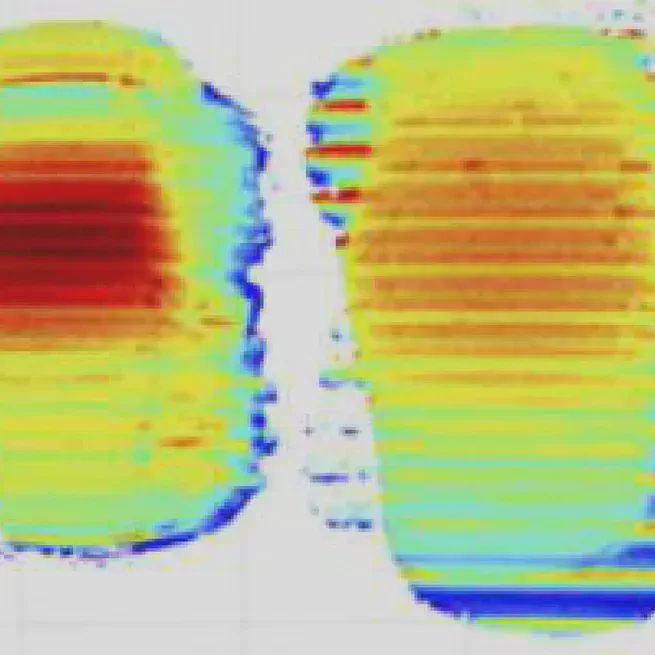
Automated reconstruction of multiple objects with individual movement based on PSP
An automated phase-shifting profilometry method for several objects that move independently of each other: each object is identified, tracked with KCF and given its own rotation and translation from SIFT feature points, and its phase is then retrieved with that movement.
Sep 1, 2020
3D Autoscan System
A scanner + rotary platform pipeline that captures arbitrary objects to ~0.1 mm in under 5 minutes—built to seed a 3D shape database without per-object parameter tuning.
Jan 15, 2019