Design of LEGO Assembly Transformation
This paper presents a design method for LEGO assembly transformation, addressing the problem of reassembling an existing LEGO model into a different target shape while optimizing the use of available bricks. This conference paper presents the foundational design framework that was subsequently extended in the journal version (Computer-Aided Design and Applications, 2018).
Problem setting
This paper presents a design method for LEGO assembly transformation, addressing the problem of reassembling an existing LEGO model into a different target shape while optimizing the use of available bricks.
In the broader publication record, this work appears in CAD'17, 122–127. The visual notes below pair the paper’s original figures with a concise reading of the method, experimental setup, and reported results.
Method and visual evidence
The method combines domain-specific measurements with an algorithmic representation that exposes the relevant structure, then refines it into a reconstruction, correspondence, segmentation, measurement, or decision result.
The extracted figures below show the main pipeline and representative experimental evidence.

Method overview. This image is extracted from an embedded PDF image object on page 1, then recomposed for web display.

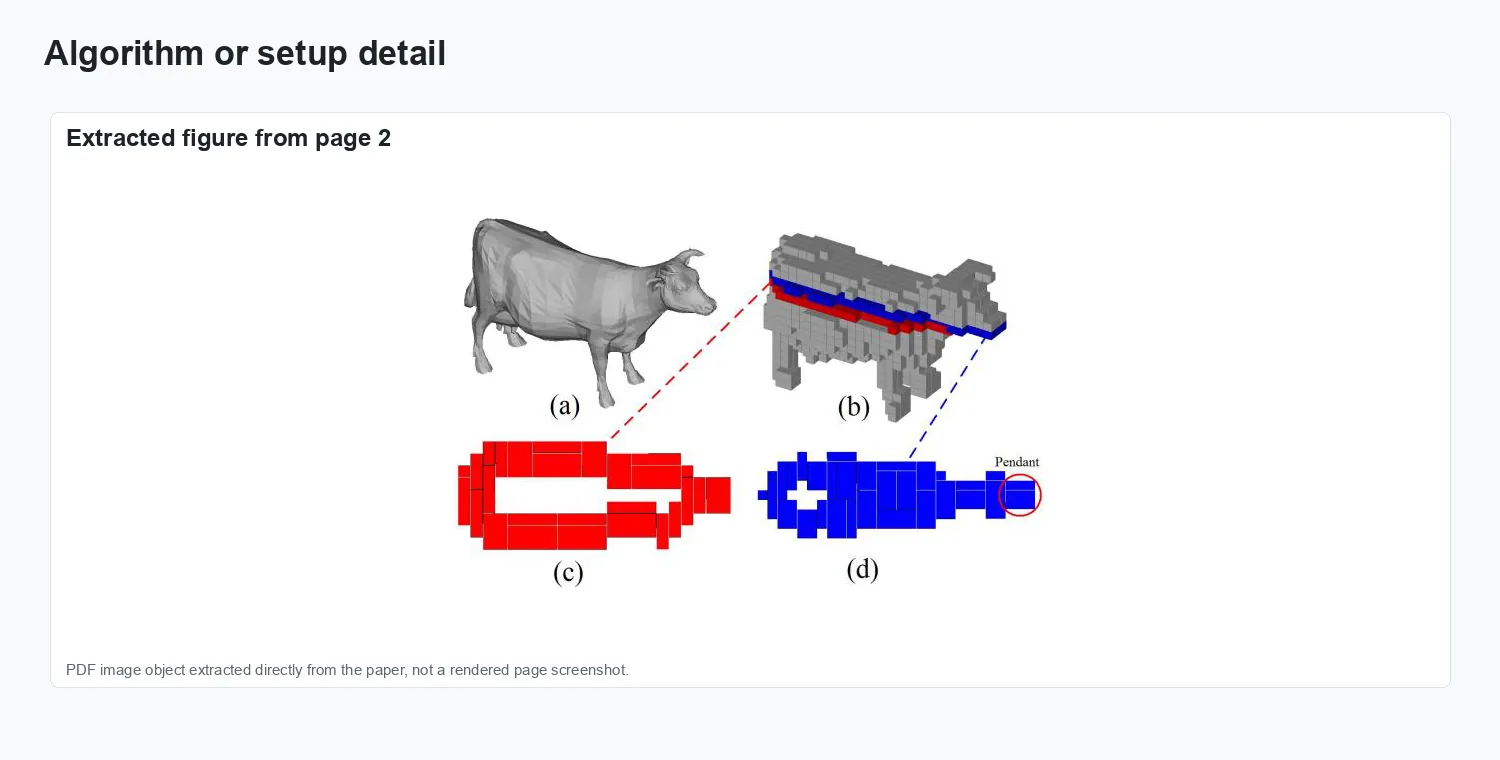
Representation and setup. This image is extracted from an embedded PDF image object on page 2, then recomposed for web display.

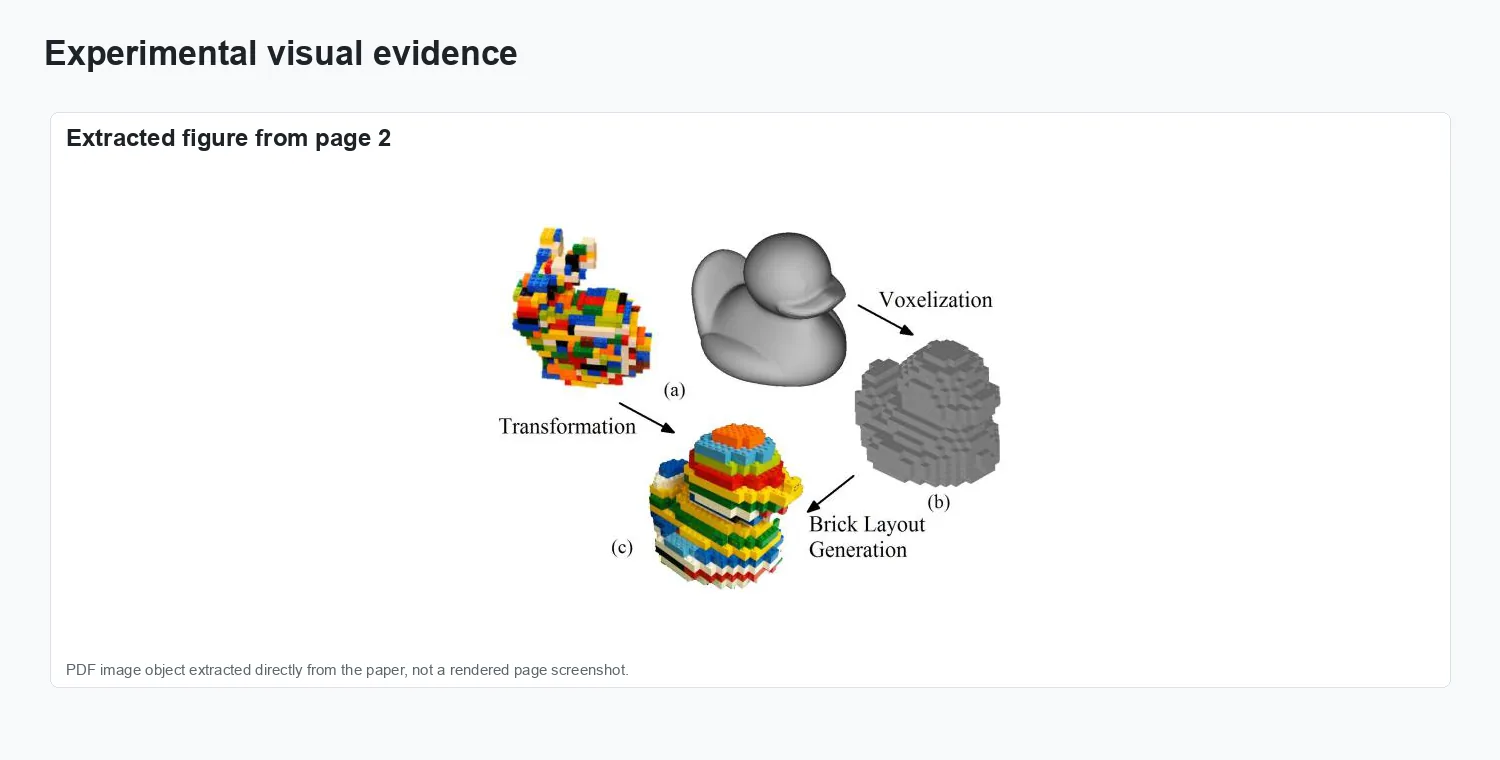
Experimental evidence. This image is extracted from an embedded PDF image object on page 2, then recomposed for web display.

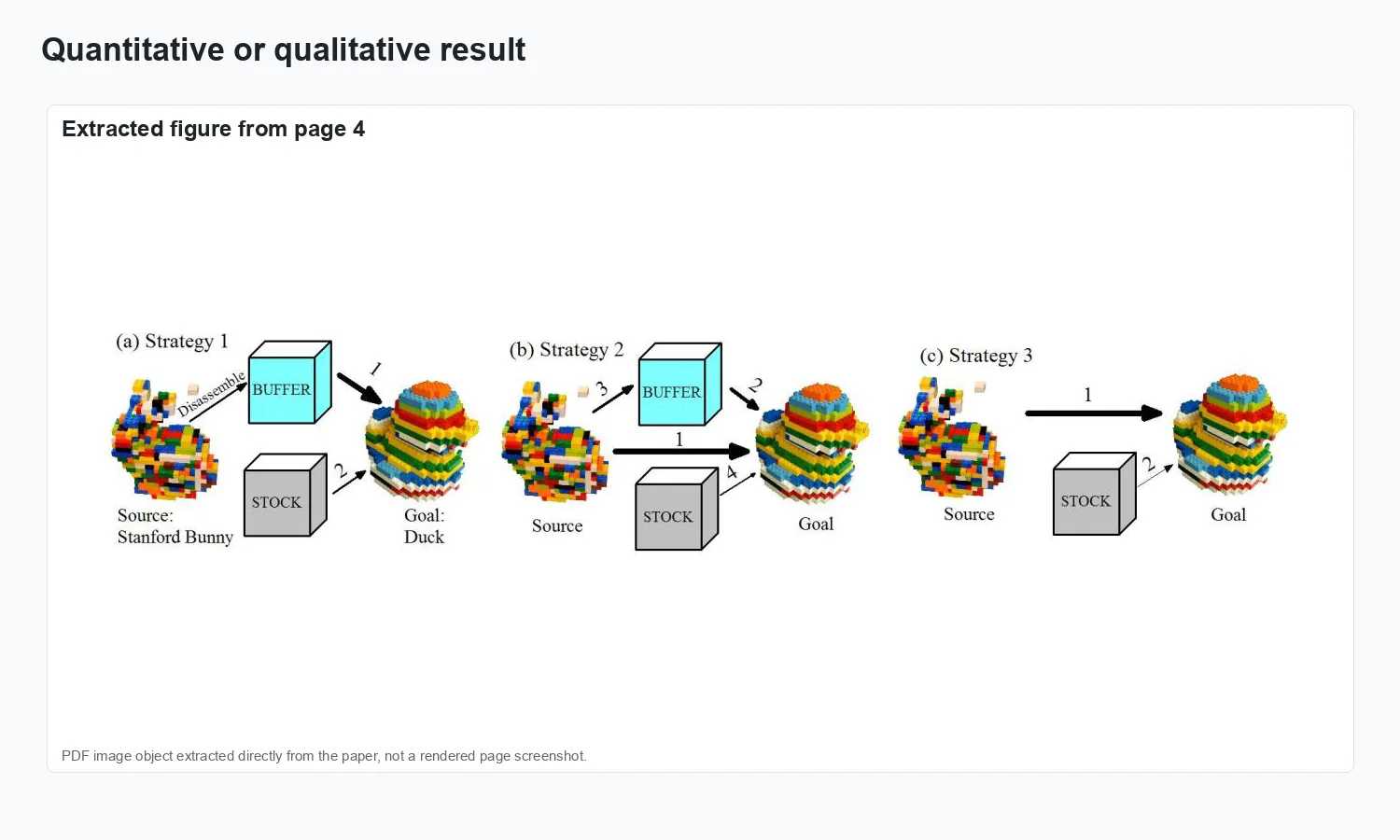
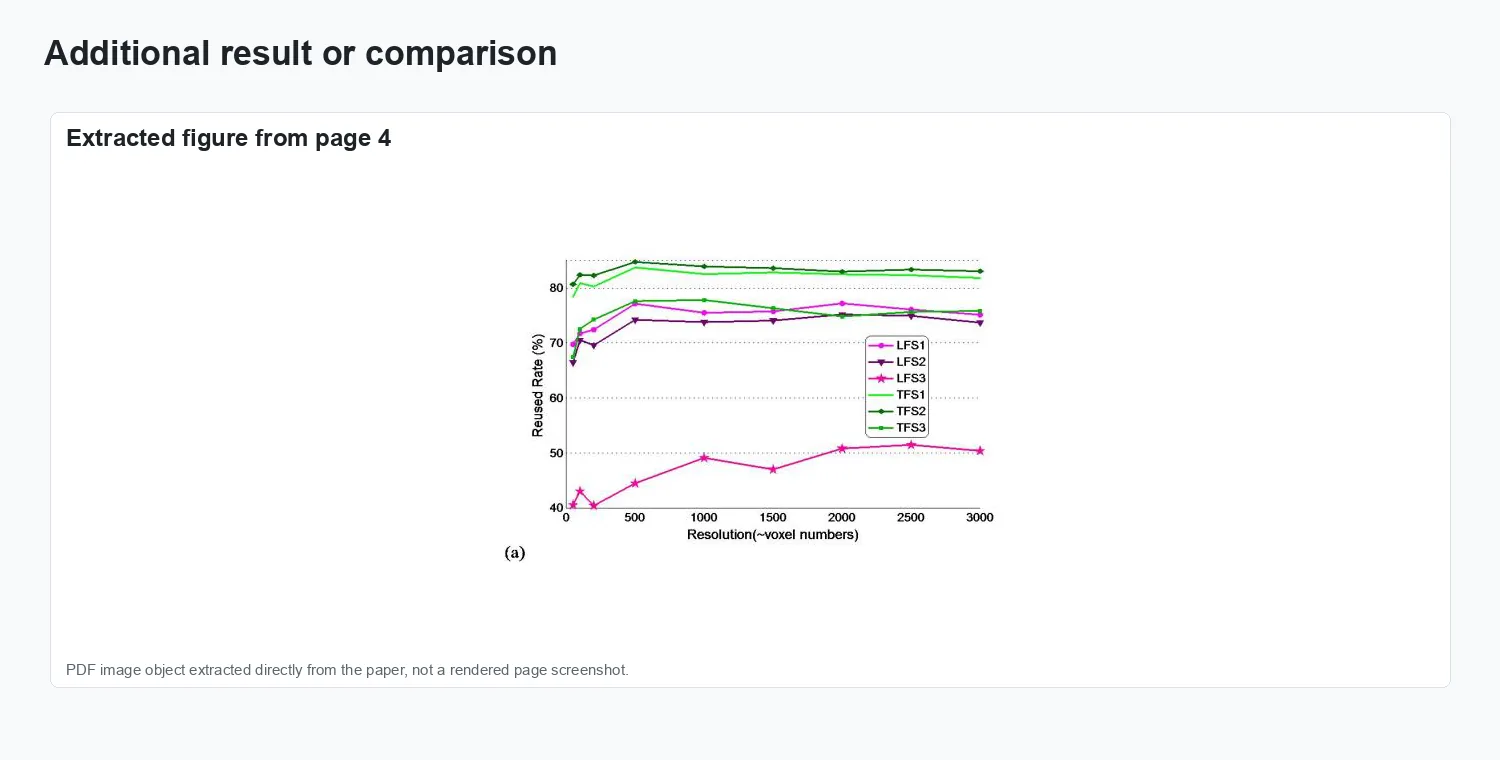
Result comparison. This image is extracted from an embedded PDF image object on page 4, then recomposed for web display.

Additional visual result. This image is extracted from an embedded PDF image object on page 4, then recomposed for web display.
Results and impact
The evaluation reported in CAD'17, 122–127 uses the extracted figures above to show the method’s measurement, reconstruction, segmentation, matching, or diagnostic behavior on representative experiments. These visuals are paired with the paper’s quantitative or qualitative analysis to make the workflow easier to inspect from the homepage.
Source handling
I extracted 9 candidate image objects from paper.pdf and generated the compressed WebP figures used on this page.