An Improved Graph Attention Network for Semantic Segmentation of Industrial Point Clouds in Automotive Battery Sealing Nail Defect Detection
Accurate defect detection in automotive battery sealing nails is vital for safety and reliability.
Jan 1, 2026
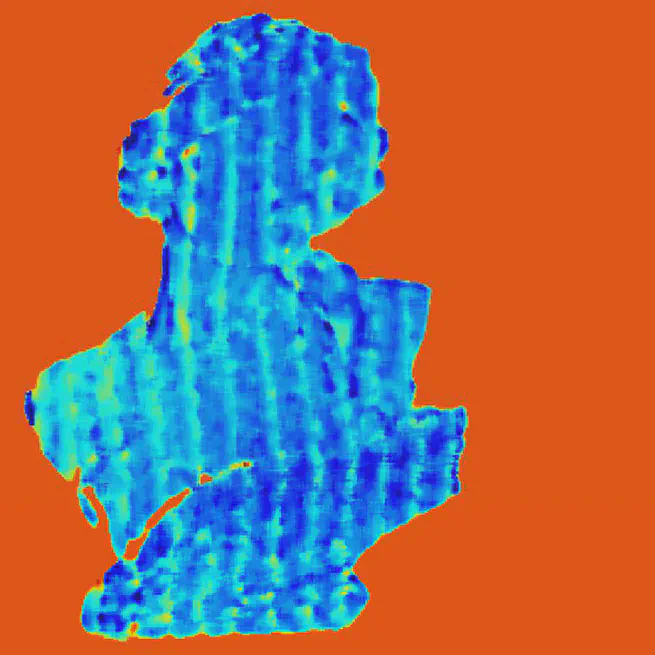
Deep transformer-enhanced dynamic structured light for three-dimensional moving object imaging
This work combines transformer-based correspondence tracking in fringe images with phase-shifting profilometry, estimating motion-induced phase errors pixel by pixel and compensating them for accurate 3D imaging of objects moving in arbitrary directions.
Dec 15, 2025
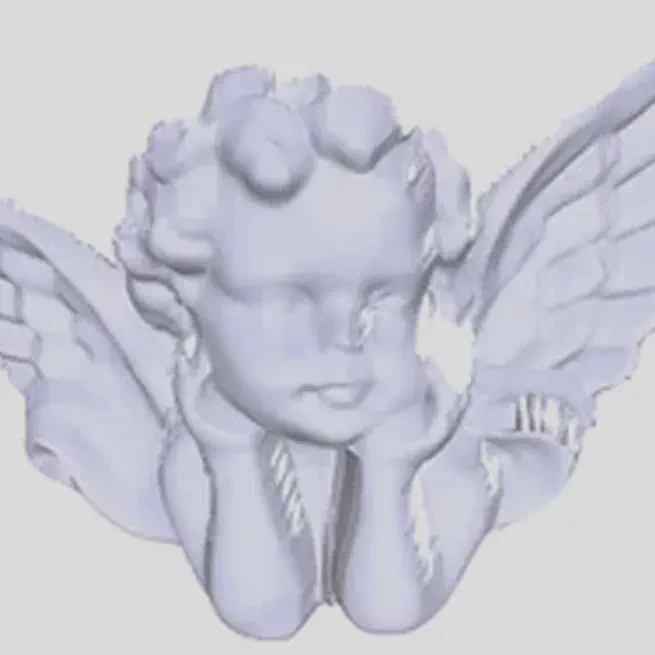
Surface Smoothing based on Discrete Orthogonal Polynomial
This paper proposes a feature-preserving triangle-mesh denoising method that estimates normals from non-local similar structures, filters normal matrices with discrete orthogonal polynomial fitting, and updates vertices to suppress scan noise while retaining sharp geometric details.
Jan 1, 2025
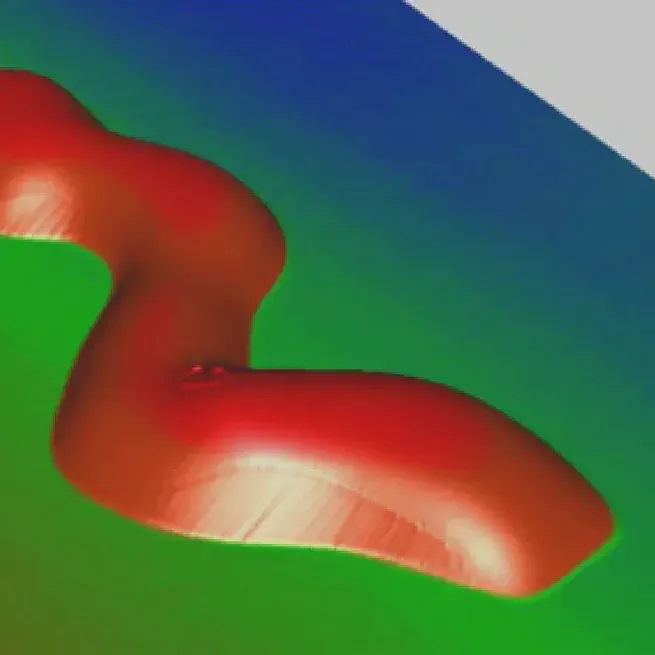
Precision 3D volume measurement of transparent adhesives via spectrally optimized line laser scanning and enhanced centroid extraction
A line laser scanning system for the volume of dispensed transparent adhesives: a green-yellow background substrate absorbs the violet laser light transmitted through the adhesive, and a candidate-point stripe centre extraction with dynamic weighted multi-factor scoring (DWMF-SS) resists noise, giving a 1.62% mean relative volume error.
Jan 1, 2025
Identifying frequency-domain operating deflection shapes and internal damage in structures using geometric vision method
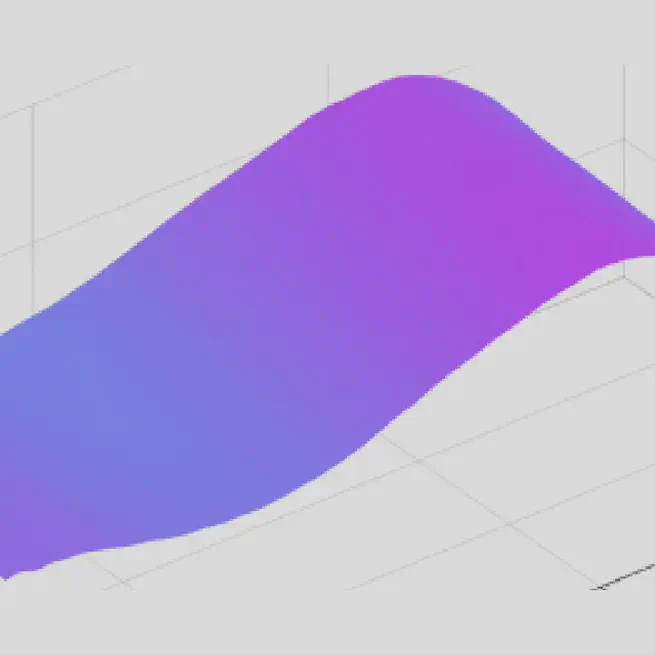
This paper presents a geometric vision method for frequency-domain operating deflection shape sensing and internal damage identification, using RANSAC-based stereo calibration, stereo-temporal matching, ODS estimation, and wavelet-based damage localization.
Jan 1, 2025
Fast Shape Retrieval Based on Differential Chain Code Descriptor and Fuzzy Contour Matching
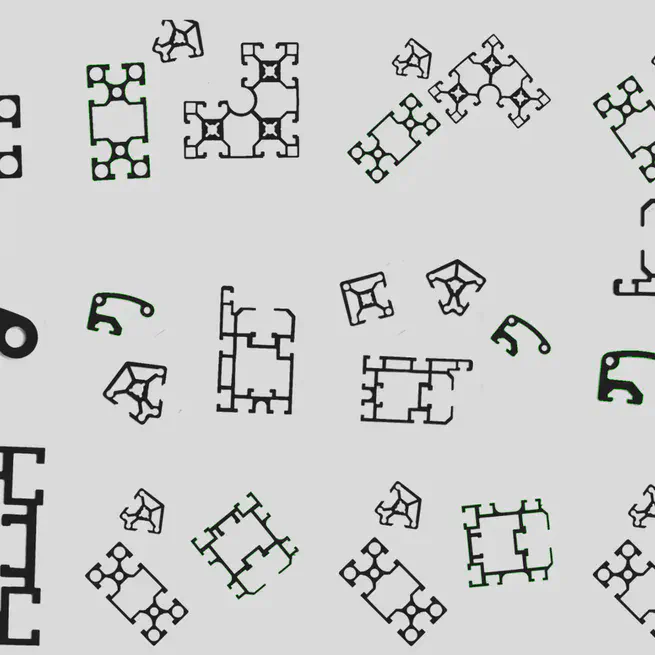
A contour matching method that encodes contours as differential chain-code sequences, matches short code segments with a fuzzy sliding-window strategy and verifies candidates by SVD alignment, giving lower mean distance than Halcon and the Smart baseline on all eight test images.
Jan 1, 2025
DeSC: Learning Deep Semantic Descriptor for NeRF Registration
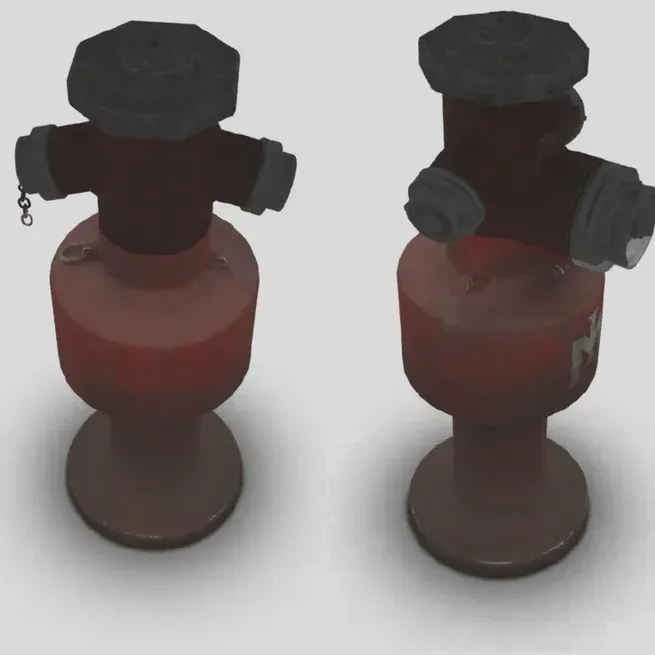
DeSC learns deep semantic descriptors from NeRF's view-independent embedding space, combining local implicit photometric cues, graph aggregation, Transformer context, and density-aware photometric consistency for robust NeRF-to-NeRF registration.
Jan 1, 2025
Calibration Method of Fringe Projection Based on High-Order Polynomial
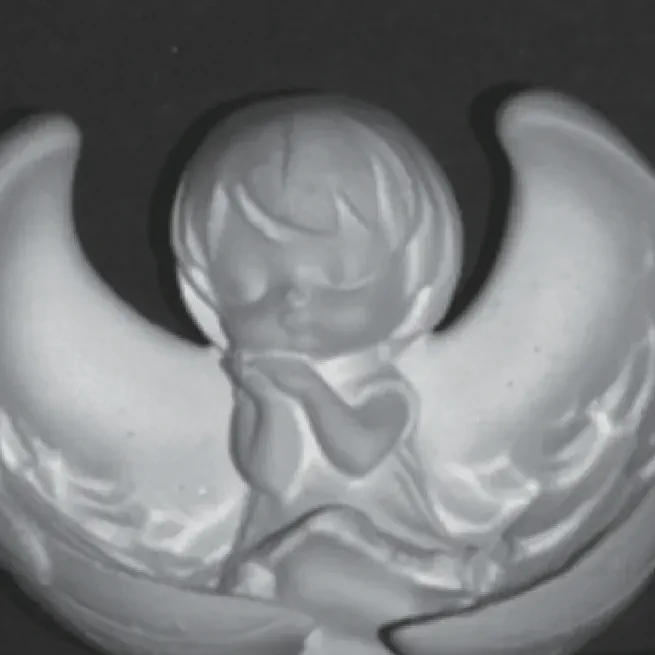
A fast calibration method for phase-shifting profilometry: a high-order polynomial maps pixel coordinates and absolute phase to 3D, and its coefficients are fitted with a sparse greedy randomized Kaczmarz (SGRK) algorithm instead of least squares.
Jan 1, 2025
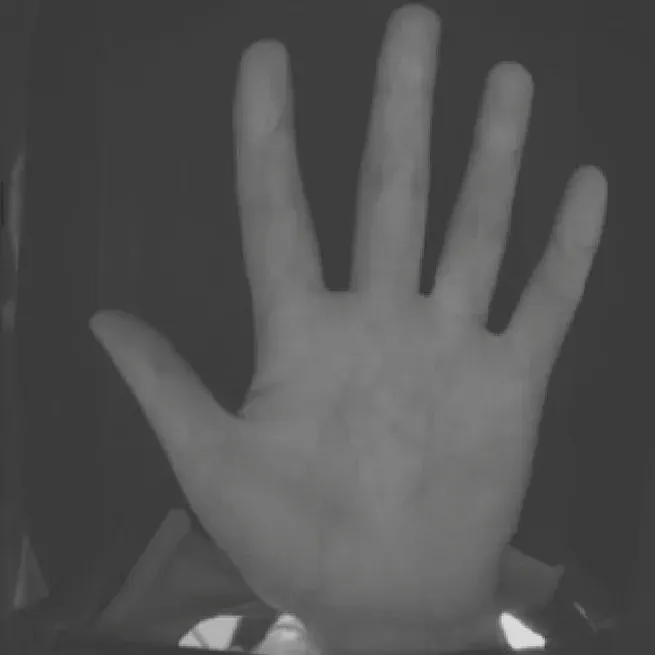
VeinTr: Robust end-to-end full-hand vein identification with transformer
VeinTr identifies people from full-hand near-infrared vein images end to end, without ROI extraction: convolution and residual blocks extract local features, a lightweight transformer aggregates them globally, and an MLP decoder outputs the vein feature used for probe-to-database matching.
Oct 1, 2024
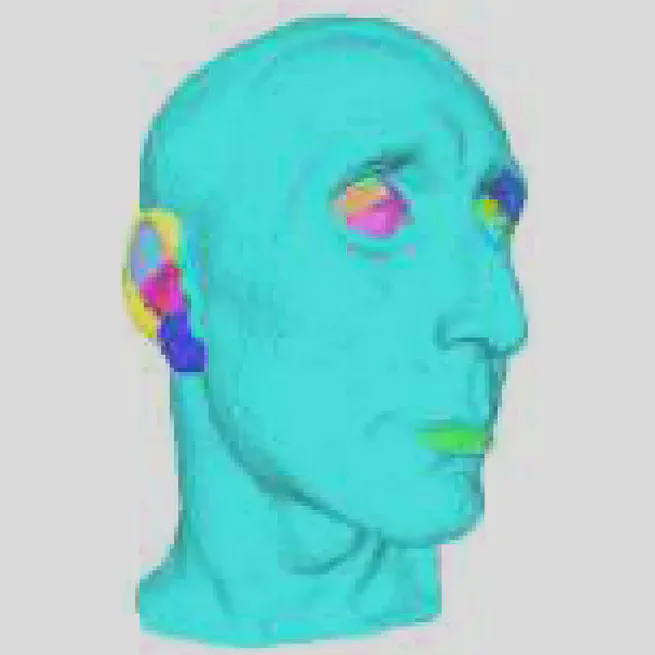
Segmentation-Driven Feature-Preserving Mesh Denoising
A segmentation-driven mesh denoising method: edge-based region growing partitions a noisy triangle mesh into regions, and each region is denoised on its own so that faces across sharp features no longer disturb the result. The segmentation backbone can be embedded into existing denoisers such as BNF, UNF, GNF and L1.
Sep 1, 2024